- Teachers and schools
Why Usborne’s 199 Pictures books are perfect for nurseries
Looking for inspiration for using Usborne books in your nursery? Searching for something to match your little learners’ interests? Looking for ways to expand vocabulary and introduce new words?
Early Years teacher, Carrie Hankin, shares how she has used the 199 Pictures series in her classrooms.
“As a teacher I have always promoted a love of books and by adding them throughout the nursery environment children are naturally encouraged to pick them up. During a nursery session all staff will, of course, model how to use a book, pointing out features such as the front cover, page titles and words. They'll also use open-ended questions such as "I wonder…?" and "What would happen if…?" The magic comes when a child becomes independently interested and actively involved in using books - taking a step beyond looking at the pictures and using books to expand their own interests and imaginative play.
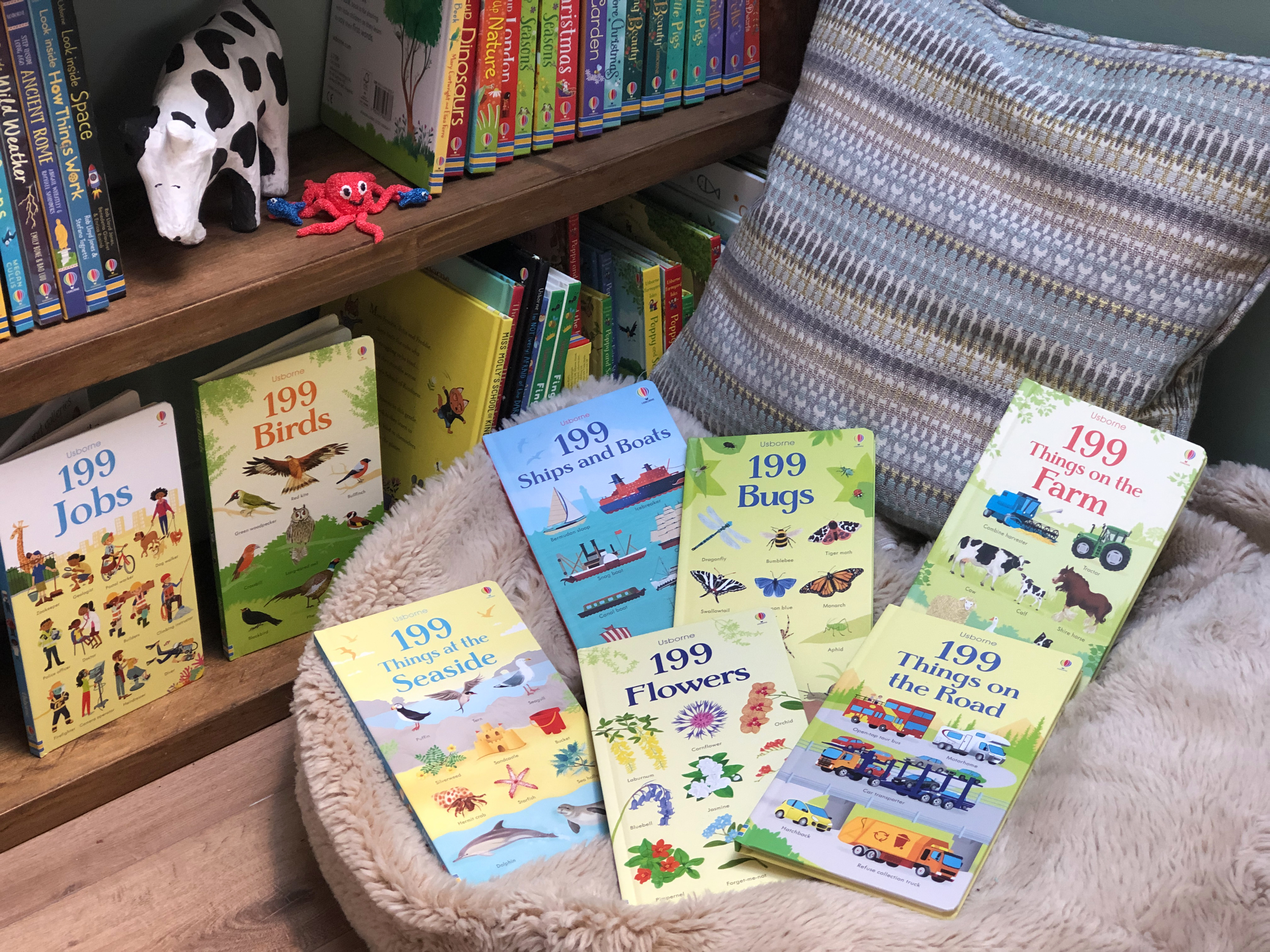
“Usborne’s 199 Pictures series is one of my particular favourites as there are so many titles to suit every learning and topic need. Here are some of the ways I’ve used these books in my nursery environments:
199 Things in the Garden, 199 Bugs, 199 Birds and 199 Flowers
“Children love exploring the world around them and I would set up explorer bags for them to help themselves to when they go on an adventure in the garden! The bags contain a 199 Pictures book, a magnifying glass, a pair of binoculars and a little clipboard and pencil to record what they see. (Children are equally happy using homemade kitchen roll tube binoculars – just tape some together!)
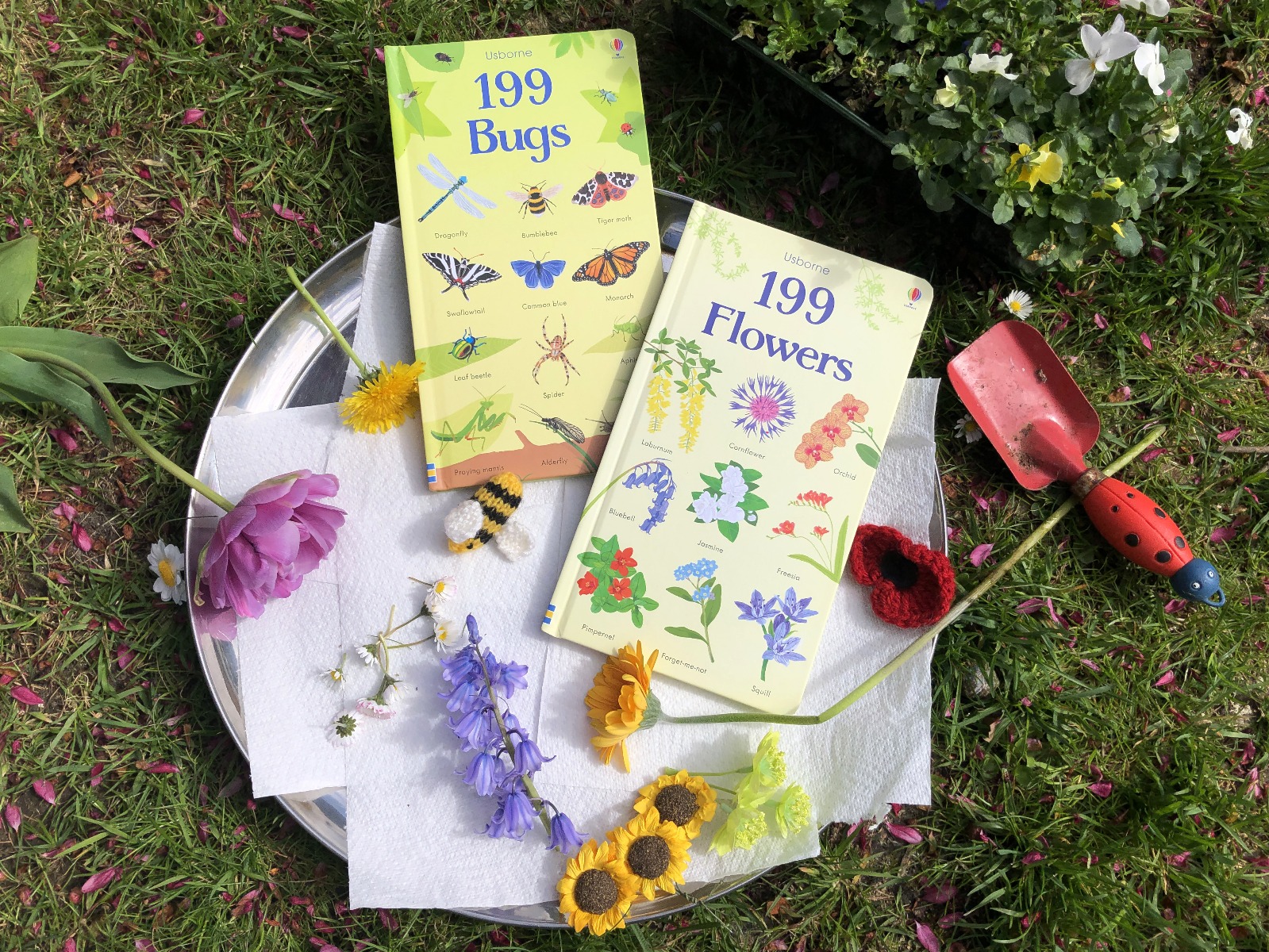
199 Bugs and Flowers in action
199 Things on the Road and 199 Things that Go
“Of course the obvious place to add these books is by a road mat. They are perfect for researching toy vehicles, and one easy way to extend play is by drawing numbered carpark bays in a shoebox lid - "Can you park the bus in bay 2?", "What is parked in bay 5?". I would also take a trip to see the road outside the nursery and the children could look in the books first to decide what they might see outside school. The typical activities would, for example, revolve around identifying what children could see driving past, making marks on their own sheet to represent what they see, and maybe, when ready, creating a tally of vehicle types.
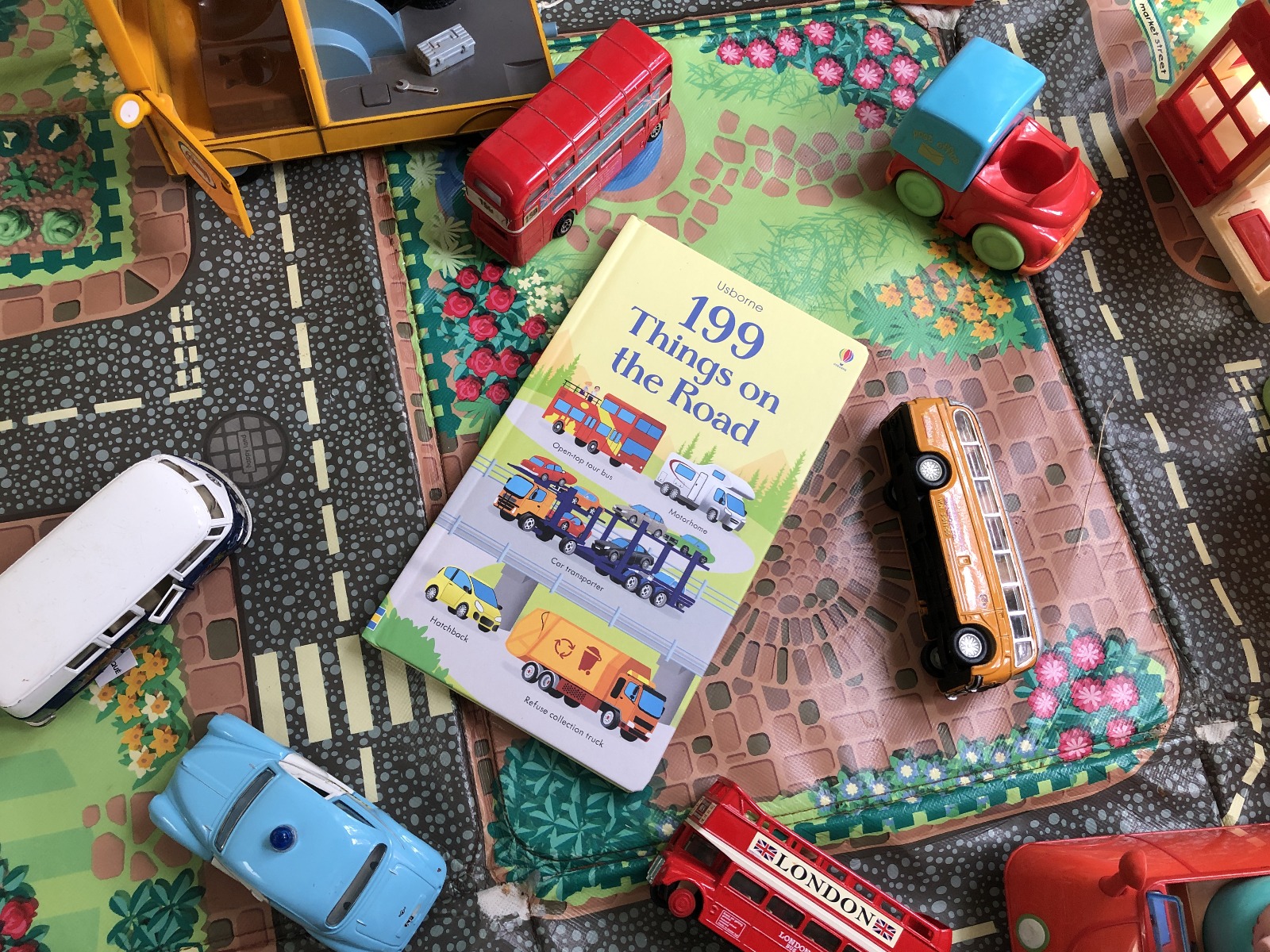
Example of 199 Things on the Road in action
199 Jobs and 199 Things to Eat
“There are two 199 books that I would add to my Nursery home corner: 199 Jobs and 199 Things to Eat.
"199 Jobs gives children so many options to think about for the future and would lead to some great conversations about what would they like to do or whether they know anyone who is in a particular job e.g. a football coach or a vet or a teacher. I would place the book with the dressing up box to encourage role play. If a child had a real interest in a certain job I would collect simple resources to allow them to follow those interests - such as a piece of hose pipe for a firefighter or a stack of books for a librarian.
199 Things to Eat is a great addition to a kitchen area and instantly leads to discussions about what children like to eat and can extend to discussions about what is healthy. I tend to make my own food for use in the home corner either by making salt dough food or letting the children use found items to represent food such as wool, fir cones or wooden blocks.
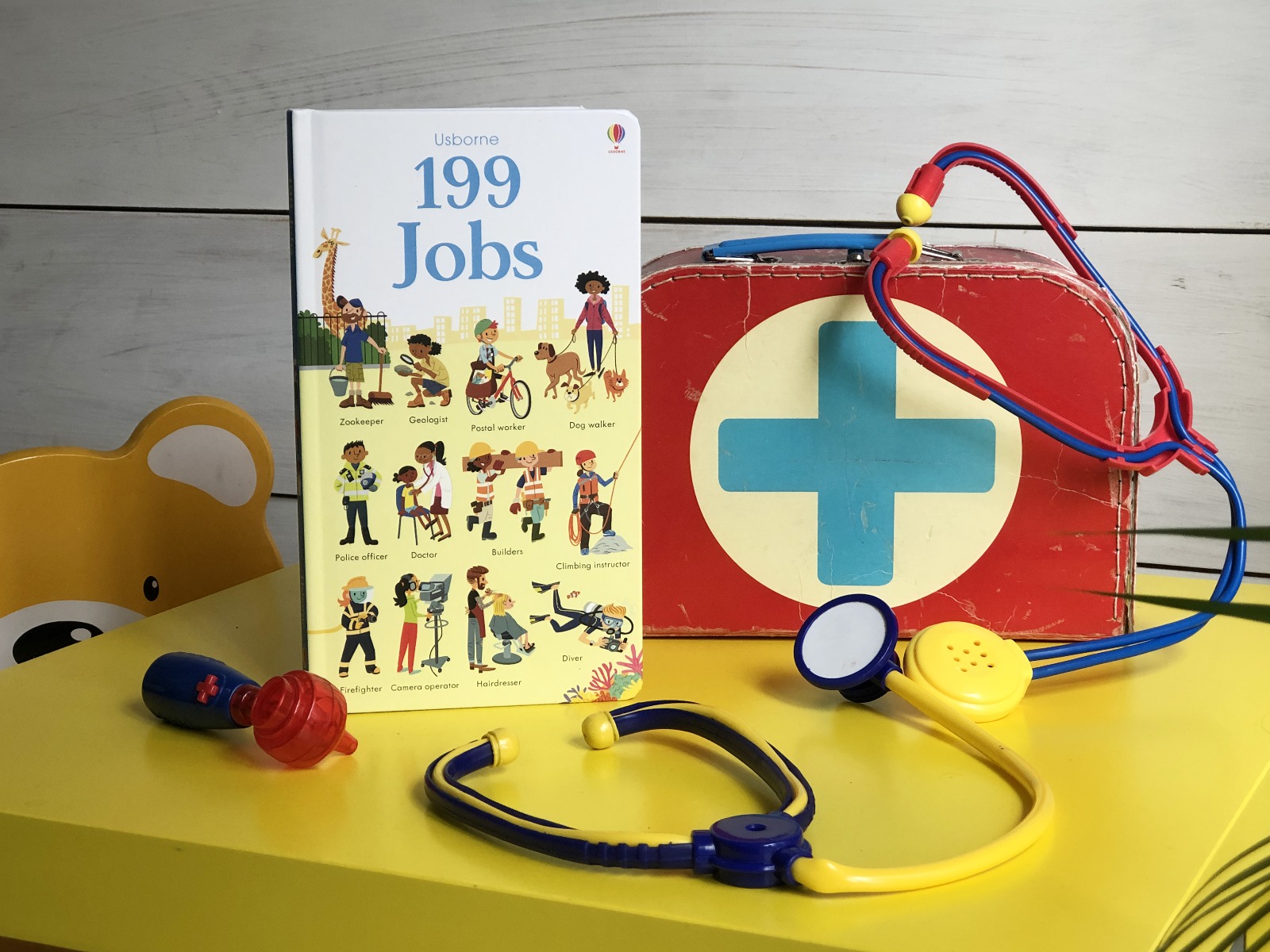
199 Jobs inspiration
199 Things at the Seaside
"This book is perfect for those living by the coast, but can be just as much fun if you are inland! When I lived in London the children loved nothing better than a ‘trip’ to the beach in the classroom! I made small world beaches in the sand tray by moving all of the sand to one end of the tray and placing blue material (or water) at other end of the tray- it’s as easy as that. I would also provide a role play beach using two huge pieces of yellow and blue material to represent the sand and water.
"The book comes in very handy when deciding what to take on a ‘trip’ to the beach! I’ve seen many a child pretending to make sandcastles or swim on a simple piece of material that is spread on the floor then put away again once they’ve finished! I often collected objects from the book and would play a ‘Find it’ game – matching the object to the picture in the book.
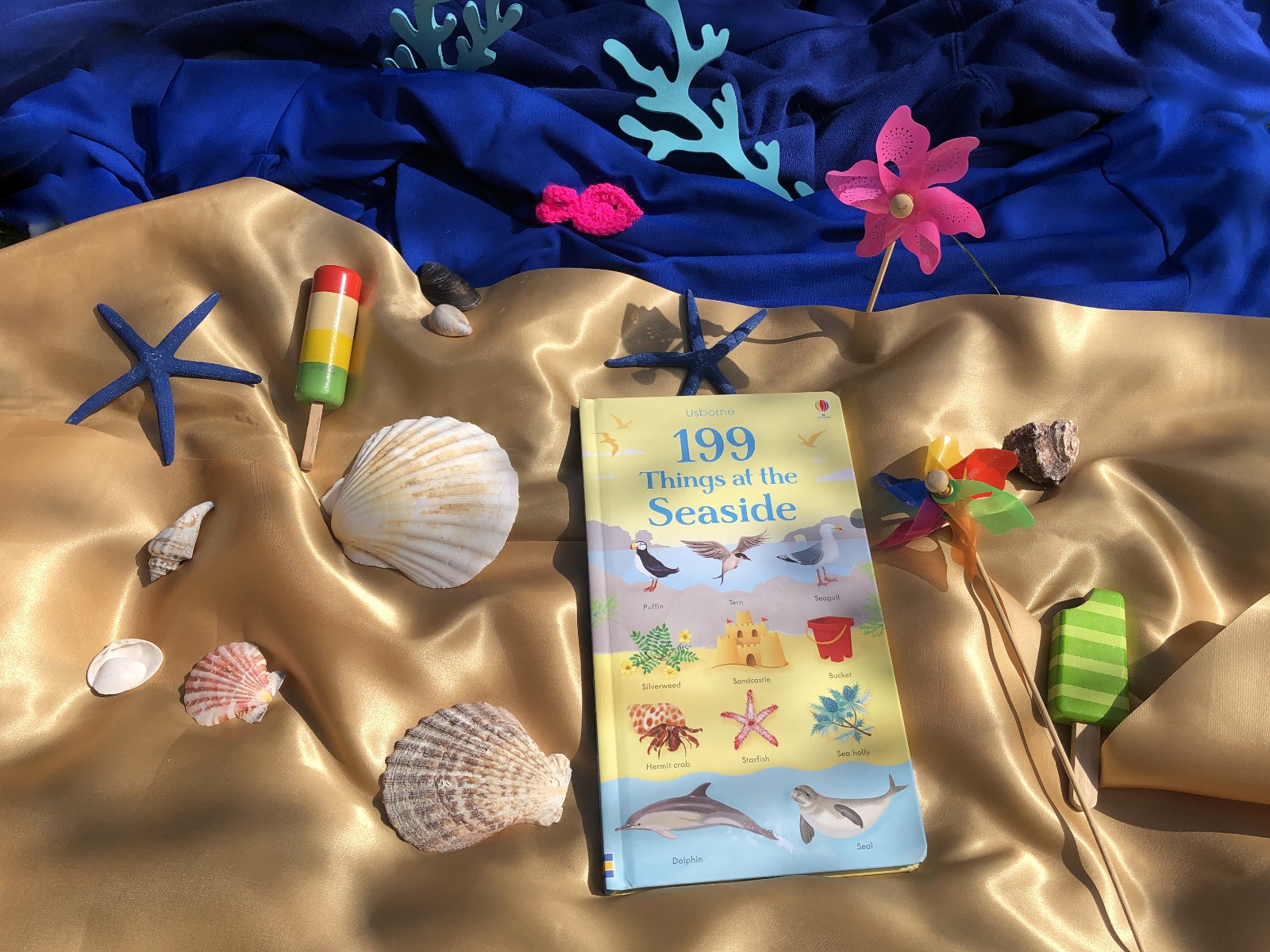
A pretend seaside set-up
199 Dinosaurs and Prehistoric Animals
“For a start, did you even know there were 199 dinosaurs and prehistoric animals?! Children love learning to say long strange sounding words and there are certainly a lot to learn in this book… my particular favourites are the Wiwaxia and Styimoloch!
“This book lends itself brilliantly to being placed with the toy dinosaurs and I would make a small sensory world for children to play with the dinosaurs in. Children enjoy helping to make swamps using mud or wet sand and plants, and maybe some water dyed with green food colouring to make it extra swampy!
“Once busy and talking about the dinosaurs the children could be challenged by adults to identify their toy dinosaurs using the book, learn to pronounce some of the names, or have their knowledge extended by finding out more about the different classifications of dinosaurs: What is a predator? Which dinosaurs lived in a swamp?
"Children also love making their toy dinosaurs stomp in clay or playdough to leave only their footprints behind. That can lead to some interesting conversations about fossils and footprints being all that we have left of dinosaurs now. It’s also a great way to introduce mark making.
199 Big Machines
“This book is ideal for adding to a construction area to encourage children to identify the toy construction vehicles provided. Children could even build their own wooden block vehicles using the pictures in the book as a reference. I also had a woodwork bench in one nursery setting and this book was great at providing ideas of vehicles that the children could build. By adding the book by the sandpit with vehicles, I would use it to encourage a discussion about what vehicles could help the children to move, clear or build with the sand, once they had decided what to make.
"All these activities create rich experiences for the children to discover and talk about what they find. The pictures in the books help give them the words they need, and the starting points for their conversations, enriching their vocabulary.
"The 199 Pictures series is incredibly versatile, and has been invaluable in my years as an Early Years teacher. I hope that I've given you some ideas of how this series would benefit your little learners too."
If you are interested in finding out more about the ways that Usborne could work with your Early Years setting, and how you could get books like this for free, check out the dedicated nurseries section of our website and let us know how we can help you.
About the Author

Lucy Raby is part of the Usborne Community Partnerships family and works as their Schools Marketing Editor, focused on helping all children to access books that will spark their imagination. A qualified teacher, she is passionate about literacy and learning and encouraging children to read for pleasure.