


You've added:
Astronomy For BeginnersRRP
NZ$22.99
On this website you can browse and buy Usborne books in English, French, German, Spanish, Catalan, Italian, Dutch, Korean and Brazilian Portuguese.
In the UK and certain countries in Europe, you can buy directly from Usborne or from an Independent Usborne Partner. In the USA you can buy books via links to Usborne Books & More, the website of our US distributors.
Elsewhere in the world we provide links to local online retailers who will fulfil and deliver your order. Please check the retailer’s delivery destinations to make sure they deliver where you are.
In China, you can buy Usborne books in English and in Chinese (simplified characters) via online and offline retailers.
Age 10+
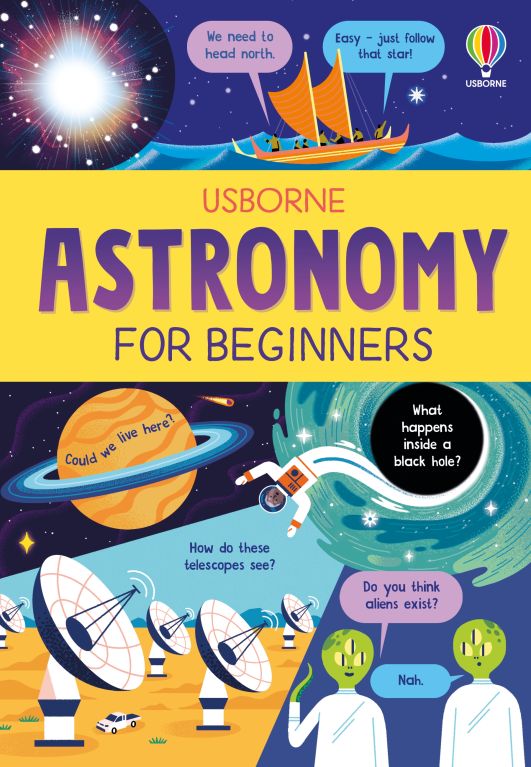
Have you ever wondered what stars are made of, or how they blaze into life? What about how a black hole works, or whether there's alien life somewhere in the universe?
These are the kinds of incredible questions that astronomers spend their days trying to answer. This book won't only give you basic answers, it really digs in to explain some seriously cool and mysterious ideas, from gravity to the origin of the universe to the problem of warping through spacetime.
Find out what Astronomers and Cosmologists have discovered so far, how on Earth they figured it all out, and the head-scratching problems they're still puzzling over in this thrilling introduction.
Chapters in this book include:
- Space rocks
- How light works
- Studying stars
- Black holes
- Gravity
- Is anybody out there?
Exploring complex ideas in easy-to-digest chunks, with expert input from astronomer Dr. Sheila Kanani MBE, Astronomy for Beginners is perfect for space-obsessed children aged 10 and above.
Discover more from Usborne's award-winning For Beginners series
Chapters in this book include:
Introduction
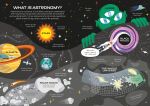
All about what astronomy actually is, and the role it has played in people's lives throughout history - from navigating the seas, to worshipping gods in the skies.
Where are we?
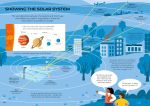
Earth's place in the universe is in the solar system, orbiting the Sun, along with seven other planets, countless space rocks and lumps of ice, and a whole load of junk.
All we can see
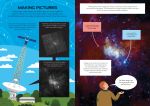
Astronomers have found out a LOT about the universe by looking through huge telescopes on earth - and by sending probes and telescopes into space.
More than meets the eye
Stars and planets give off radiation. By studying it, astronomers can find out all sorts of things - from the temperature of a star and the chemicals it contains, to the shape of a planet's surface.
Explaining it all
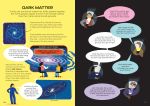
To explain how the universe works, astronomers come up with theories. These are then backed up by evidence from telescopes., lab experiments, or complicated models run on supercomputers.
The universe
The universe expanded from a tiny dot, in a mind-blowing event called the Big Bang. But what shape is the universe? How might it end? And could there be more than one?
Gravity
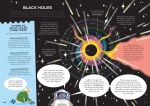
Gravity holds the universe together, interacting with space and time. Black holes are the regions where gravity is strongest. What would happen if you fell into one?
Is anybody out there?
Searching for aliens starts with a search for water, because all life we know depends on it. At the same time, people listen out for alien signals, as well as planning their own adventures in space.
Astronomy and you
Get stuck into astronomy from your own home, or choose your ideal astronomy career. Also, find out about the everyday technology given to us by astronomy.


View series: For Beginners
Visit Usborne Quicklinks for links to websites where you can find out more about astronomy, meet astronomers, and explore the universe.
You've added:
Astronomy For Beginners